7 Reasons Why Spoonflower Is a Great Step for New Surface Designers
If you’re in that early stage of your surface design journey (the stage where you’re serious about improving, you’re building collections, you’re starting to think more strategically, but you’re not quite ready to pitch brands or apply to licensing agencies), Spoonflower is one of the best places you can plant yourself for a while.
Not because it’s easy. It’s not.
And not because it’s a guaranteed path to passive income. It’s definitely not.
But because it gives you something most new designers really need: a place to practice in public, at your own pace, while slowly building a portfolio people can actually find.
Honestly, I wish more designers saw Spoonflower this way - not as the end goal, but as a really smart “next right step.”
Here’s why.
1. It makes you design with real customers and products in mind
One of the biggest challenges for new designers is learning how to move from “pretty artwork” to “useable pattern.”
On Spoonflower, everything is tied to real products: fabric, wallpaper, bedding, home goods. Which means:
scale matters
repeat direction matters
color contrast matters
style consistency matters
You’re not just making a square for Instagram, you’re learning how your art actually works in someone’s home.
That thought shift alone will makes you a stronger designer almost immediately.
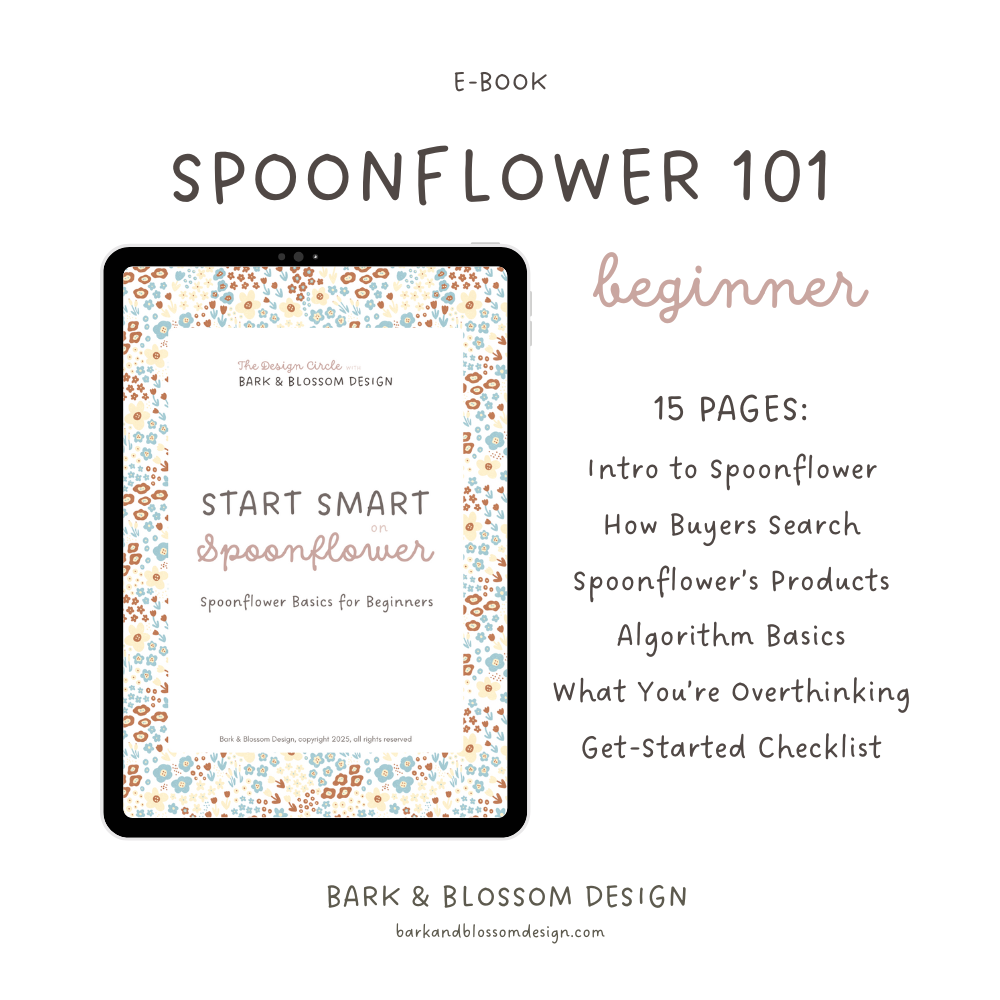
Start Spoonflower with clarity — not overwhelm.
If you’ve been thinking about joining in on Spoonflower but feel intimidated… or you signed up and immediately froze, this guide was made for you.
Start Smart on Spoonflower is a beginner-friendly introduction that walks you through how the platform works — in a simple, encouraging way. No technical overwhelm. No pressure to be perfect. Just a clear starting point so you can actually begin.
Perfect for you if you:
haven’t joined Spoonflower yet but want to understand it first
feel overwhelmed by how it all works
signed up but haven’t uploaded anything
are stuck in research mode and need clarity
What you’ll learn:
What Spoonflower is (and isn’t)
How buyers use the platform
The basics of designing for different products
How search and visibility work (in plain English)
Common beginner mistakes to avoid
A simple first-month checklist
15-page PDF · Instant download
This is true beginner-level guidance — the “before you start” foundation that helps you move forward with confidence instead of overthinking every step. If you’re ready to stop circling and actually get started, this will show you how.
2. You get clear feedback (the useful kind)
Over time after you upload a new design, you get to see:
how many people favorite it
whether it gets added to collections
if it starts selling on its own
where interest drops off
It’s not a perfect science, but it’s a safe way to begin understanding your audience and how your work lands with real-world makers: quilters, sewists, small shop owners, interior designers, etc.
And unlike Instagram, where the algorithm feels like a moody teenager, Spoonflower feedback tends to be slower, steadier, and more honest.
3. The design challenges are like built-in prompts for portfolio building
If you want structured prompts geared toward breakout trends, the Spoonflower challenges are basically guided creative briefs.
You get:
a theme (that has proven buyer interest)
a deadline and a workable timeline
a clear product direction
Even if you don’t place in the top 100, every challenge adds another piece to your portfolio. You’re building body of work without having to overthink it. Plus, design challenges are THE prime way to get traction and visibility on Spoonflower. Skip participating in them at your own detriment.
4. You don’t have to wait until you’re “established” to be discovered
Some platforms require big followings, a strong established portfolio, or impressive credentials, but Spoonflower doesn’t.
A brand-new designer can join the platform and right away:
get found through search
get featured in curated collections
land organic sales
build repeat customers
get noticed by small shop owners
slowly grow a following right on the platform
You don’t need an agent. You don’t need perfect branding. You don’t need a giant portfolio. You simply need work that connects. It’s one of the few places where new designers actually have a shot at early momentum.
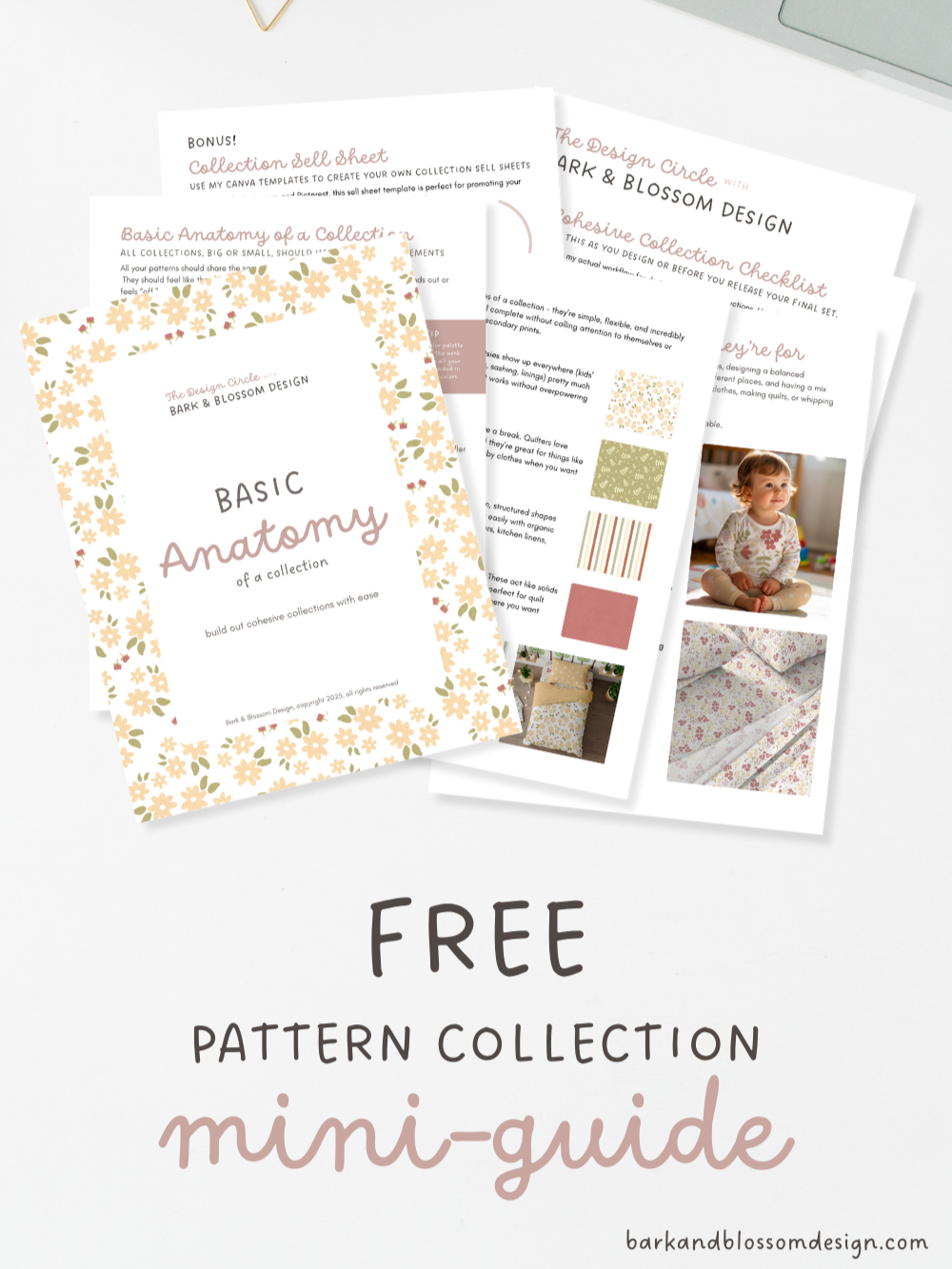
5. It encourages you how to design in collections (which is often what licensing deals are for)
Spoonflower has a Collection feature for a reason - buyers love them. It makes shopping by color, style, theme, or scale a breeze; you’ve done the hard curation work for them. So, working on Spoonflower can naturally nudge you into collection thinking.
You can learn what pattern types buyers need and for what purpose, how colors carry across patterns, how motifs repeat in new ways, and how a collection feels when it’s “enough” versus when it needs more.
This is the exact skillset that licensing art directors are looking for when they’re searching for artwork to use in a new product line.
Showing off your collections is a breeze on Spoonflower.
6. It grows with you whether you stay small or aim big
Some designers use Spoonflower as a playground, while some treat it like a serious business. And some eventually use it as a stepping stone into licensing, brand collaborations, or selling through their own website.
There’s no single path you’re forced into; any direction is a good one as long as its where you want to go. You get to grow your shop, your portfolio, and your confidence at the pace that fits your life - which is honestly such a gift when you’re still finding your footing.
7. It helps you get comfortable being seen
This one gets overlooked, but it’s huge.
Being a designer today means putting your work out there, and that can feel terrifying at first. Spoonflower is a gentler way to practice that muscle:
you upload your work
people see it
people respond
nothing catastrophic happens!
The more you do it, the less scary it becomes, which will help tremendously when you’re ready to pitch clients or license your work.
If you’re ready to join Spoonflower, start smart.
A lot of designers jump in excitedly… and then get overwhelmed by the rules, the uploading process, the repeats, the dpi, the challenges, the “verified seller” requirements… all of it.
Start Spoonflower with clarity — not overwhelm.
If you’ve been thinking about joining in on Spoonflower but feel intimidated… or you signed up and immediately froze, this guide was made for you.
Start Smart on Spoonflower is a beginner-friendly introduction that walks you through how the platform works — in a simple, encouraging way. No technical overwhelm. No pressure to be perfect. Just a clear starting point so you can actually begin.
Perfect for you if you:
haven’t joined Spoonflower yet but want to understand it first
feel overwhelmed by how it all works
signed up but haven’t uploaded anything
are stuck in research mode and need clarity
What you’ll learn:
What Spoonflower is (and isn’t)
How buyers use the platform
The basics of designing for different products
How search and visibility work (in plain English)
Common beginner mistakes to avoid
A simple first-month checklist
15-page PDF · Instant download
This is true beginner-level guidance — the “before you start” foundation that helps you move forward with confidence instead of overthinking every step. If you’re ready to stop circling and actually get started, this will show you how.
And that’s exactly why I created my Start Smart on Spoonflower guide: to help new-but-serious designers skip the confusion and begin with a solid foundation.
If you’re planning to join, or you joined but feel a little lost, it’ll walk you through:
what Spoonflower is (and what it isn’t), so you know exactly what to expect
how buyers search, browse, and shop, and what that means for your designs
the basics of designing for fabric, wallpaper, and home décor
how the Spoonflower algorithm works, in plain English
why consistent uploading helps your style and your confidence
the common things beginners overthink (and what you can let go of)
a simple, clear checklist to help you set up your shop and upload your first listings
It’s basically everything I wish someone had handed me when I started.
I hope this helped you feel a little more grounded and a lot more confident about taking that next step into Spoonflower. It’s such a fun place to grow as a designer, and you honestly don’t have to have everything figured out to get started. Just begin where you are and let the rest unfold as you go. And if you ever want to share what you’re working on or swap notes about the platform, I’m always happy to chat.