How to Do Trend Research as a Surface Pattern Designer
If you’ve ever tried to “research trends” for surface pattern design and immediately felt overwhelmed, you’re not alone. It can feel like this vague, mysterious thing everyone else magically knows how to do. And honestly, it took me a long time to realize that trend research isn’t some official process where you need fancy reports or insider connections. It’s really just paying closer attention to the world around you - the shops you wander through, the colors you keep seeing pop up, the tiny shifts in what people are drawn to. Once you start treating it like an ongoing practice instead of a big intimidating task, it becomes so much easier to spot patterns and understand what might be coming next.
What “Trend Research” actually means
The first thing to know is that trend research isn’t just a magic wand that tells you exactly which pattern types, themes, or motifs to create so that your work will sell next season. It’s more of a process of gathering external influences, observe shifts, and noticing what is gaining traction.
More formally, people working in fashion or home-goods predict trends by blending qualitative research (what people feel, desire, respond to) with quantitative research (market data, sales, search volume).
There are macro trends: big, slow-moving cultural or societal shifts that influence many industries, and micro trends: smaller, sometimes fleeting aesthetic nudges that might emerge in niche corners, like indie stationery, artisanal ceramics, or low-key home décor.
As a surface pattern designer, I try to look for a bit of both. Macro because they steer the general vibe, micro because those are the places a unique style like mine might shine.
Where I Look for Trends, And How I Organize Them
While I’m out and about running errands with my kids, I am keeping my eyes on what products are available in shops I visit. This can be a really good way to see what is currently trending because these bigger businesses are in-the-know in advance on upcoming trends and plan their product offerings seasons ahead. Here are a few easy ways you can do this yourself:
Industry & style-forward shops, magazines, and lifestyle spaces. Places like boutiques, home-goods shops, indie stationery stores, or trendy home décor brands are often where design trends start to surface. Designers often mention brands or retailers such as home décor shops or lifestyle-driven stores as trend-forward sources. Walk through some shops and look closely at the pieces they have available. You’ll start to notice repeating textures, colors, motifs, and styles.
Maintain your own “idea library”: I keep a note on my phone for jotting down/snapping pictures of visuals, color palettes, motifs, textures, and recurring vibes I see across different sources (shops, social media, product catalogs, nature, vintage, etc.). Over time this little database starts to show the same elements popping up on repeat.
If you’re looking for upcoming trends, things that are emerging, and ideas that are breaking out now, you’ll have to do a little more digging. Here are a few places I like to look to find up and coming trend ideas:
Etsy
This might seem kind of obvious, but I like checking the Etsy homepage because their editors highlight seasonal themes and categories based on what themes their back end data is showing as breaking out. Even typing a simple word into the search bar can be incredibly revealing - whatever auto-populates usually reflects rising shopper interest. It’s not perfect, but it’s one of the more real-time looks at what people are actively searching for right now, and if you are on top of this, you’ll start to see emerging trends here.Design Week, Adobe Express, and Canva trend hubs
These platforms usually recap graphic design trends as they emerge. These sources lean a little more digital/graphic design, but that’s actually still helpful because you get a sense of what shapes, colors, or layout styles are starting to feel fresh in the broader design world before they show up in patterns.Industry blogs and magazines
Don’t skip out on these obvious sources. Sites like Architectural Digest or Homes & Gardens can hint at interior shifts (colors, materials, mood) long before they hit fabric. Pattern Observer, on the other hand, is much more niche, and they regularly break down pattern-specific trends in a way that’s super digestible for designers.Trend forecasting platforms like TrendBible and WGSN
While the paid memberships are a huge boost, you don’t need to pay to benefit from these sources. Even their free blog posts and social content can point to bigger themes you’ll eventually see in retail. And because Spoonflower’s weekly prompts often pull from WGSN direction, following these sources helps you understand where those ideas originate.Spoonflower
Spoonflower hosts regular design challenges for their artists to generate new art for their site, and their prompts are - surprise surprise - very trend-forward. Plus, as an added layer, the submitted patterns in each challenge show what other designers are picking up on. For example, in a recent design challenge I noticed that 7 out of the top 10 designs all had… cats. Were cats part of the design prompt? Nope. Coincidence? I think not.Creative Market and Dribbble
These are great for spotting micro-trends. Designers on these platforms tend to experiment early, and you’ll often see a color palette or motif style appear there before it reaches bigger marketplaces. It’s also useful for noticing what buyers are downloading, which can spark ideas for your own spin on a trend.Retailers like Urban Outfitters or ModCloth
They’re still some of the fastest at picking up emerging styles, especially for home and apparel. Browsing their bedding, wall art, or clothing can give you a quick read on what motifs, colors, and moods are moving into mainstream taste.Cultural & social shifts beyond “decor/design world”. Trends are often rooted in what people do now — how they live, what they care about. Economic realities, social movements, new lifestyles, environmental awareness, shifts in comfort/homemaking — these can influence what kinds of patterns, textures, and colors resonate. Forecasters often mention these broader sociocultural drivers as key.
Why This Works — Even If You’re a Small Studio, Not a Big Trend House
Trend-forecasting firms have massive resources. But as an independent surface-pattern designer you have something they don’t: flexibility, intuition, and a personal aesthetic voice.
Because you’re small, scanning shops, indie makers, lifestyle influencers, and even everyday life gives you agility. You can react to subtle shifts, experiment playfully, and trust your eye without needing huge data sets.
And by turning trend research into an ongoing practice rather than a one-time thing, you build a sense of what’s cyclical, what feels fresh, what resonates for you rather than just what’s hyped.
Learn About Upcoming Movements for Surface Design
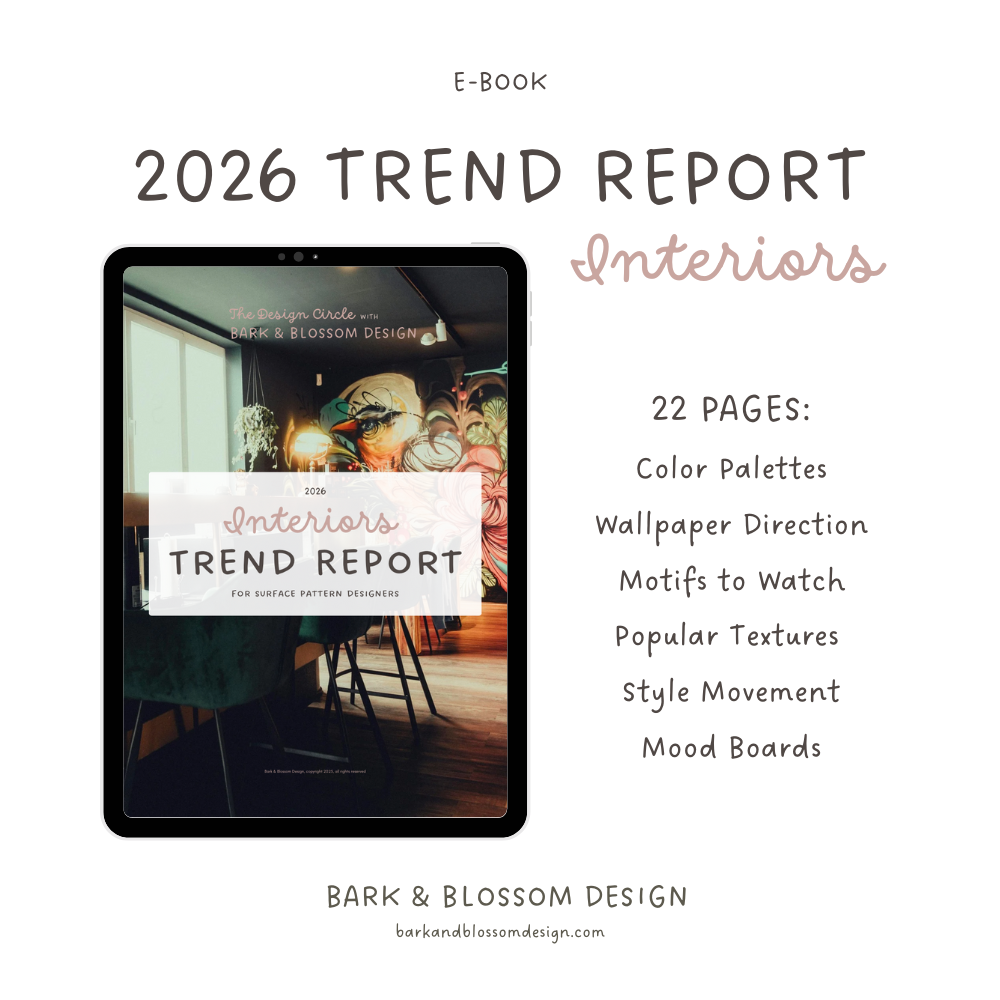
If you want clear direction for what to design in 2026 without spending hours researching, this 22-page trend report pulls everything together in one simple place. It covers the major shifts in interiors, color, wallpaper, and motifs so you can start creating with confidence today.
Inside, you’ll find:
The key color directions shaping interiors in 2026
What’s changing in wallpaper (scale, materials, styles)
The main motif themes worth designing into
Smaller “honorable mention” trends to keep on your radar
General interior design trends that will define pattern design
Four curated mood boards that group everything into easy visuals
A short op-ed from me about AI use in design and the value of hand-drawn art
Why this will help you:
Saves you hours of searching, researching, and compiling trends
Gives you a clear starting point for fresh designs
Helps you make work that aligns with what’s happening in interiors
Offers visual guidance you can refer back to all year
Prevents overwhelm AND blank-canvas syndrome at the same time
If this sounds helpful, grab the report and start designing right away!
Pick up my trend report
If you love the idea of applying trend research to your pattern design business, but don’t really have the time (or the patience) to dig through all these sources on your own, you can always grab my latest trend report.
I pull together the most helpful pieces from all of these places and break everything down in a way that’s easy to use when you’re planning new artwork or collections.
I hope this made trend research feel a little easier and a lot more approachable. If you ever want to chat about what you’re working on or compare notes on what you’re seeing out in the world, you can always reach out. I love hearing from other designers.